 Outlet Store
 We Deliver!
Picture this: a cannabinoid that gives you energy instead of gluing you to your couch. Meet THCV (tetrahydrocannabivarin) – basically THC’s high-achieving cousin who chose the gym over the couch and actually remembered their New Year’s resolutions past January 15th.
While THC is busy raiding your fridge at midnight, THCV is out here, potentially helping with focus, appetite control, and energy. This minor cannabinoid is gaining serious traction as people discover there’s more to cannabis than just THC and CBD. Ready to meet your cannabis plant’s most productive compound? Let’s explore THCV.
What is THCV? (aka tetrahydrocannabivarin)
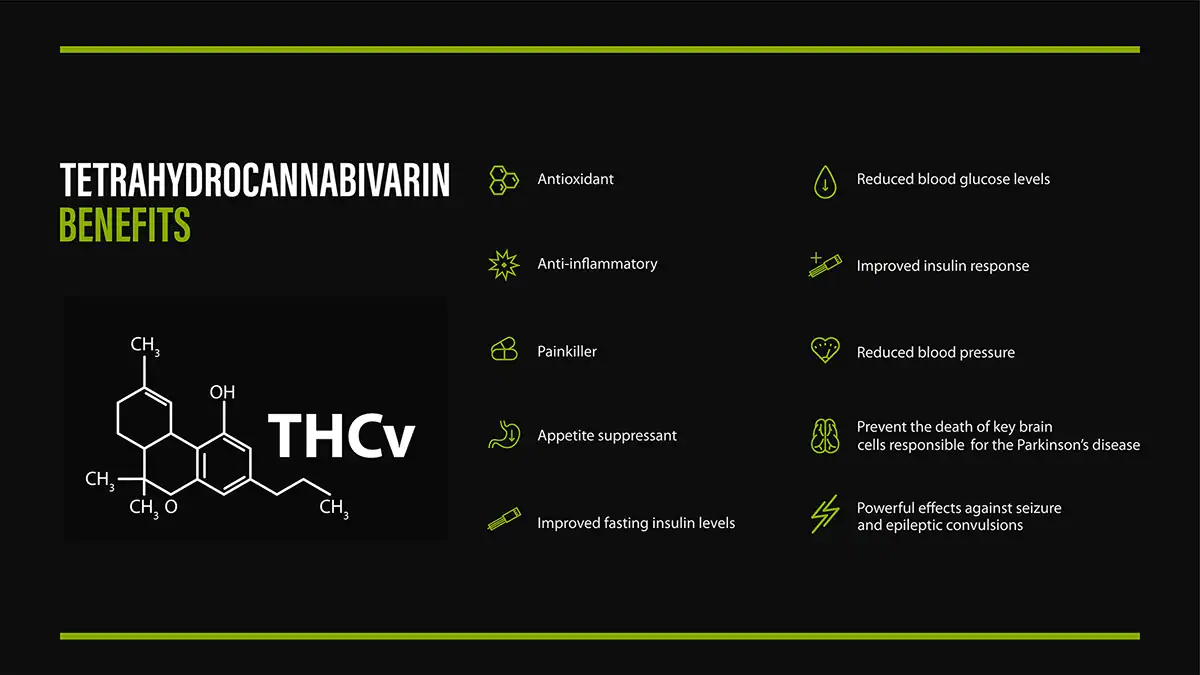
THCV is a cannabinoid found in cannabis – think of it as the propyl analogue of THC. While THC and CBD are the household names everyone recognizes, THCV is that friend who’s been quietly crushing it in the background and is about to become everyone’s new obsession.
This minor cannabinoid starts its journey as CBGVA (cannabigerovarinic acid) and transforms during the cannabis plant’s growth process. It’s structurally similar enough to THC to interact with the same receptor systems, but THCV has a slightly shorter side chain that completely changes how it behaves in your body. Like if THC had a twin who chose protein smoothies over pizza – same family, totally different vibe.
Pro Tip
Most cannabis strains contain less than 0.2% THCV, making it rarer than finding a parking spot at a dispensary on 4/20. African sativas like Durban Poison can contain nearly 1% THCV content – making them the unicorns of the cannabis world.
How THCV Works: The Science Behind the Benefits
Here’s where things get fascinating. THCV is a cannabinoid that acts like a mood ring for your CB1 receptor. At low doses (under 10mg), THCV may actually block these receptors, which could suppress appetite and boost energy. But increase the dose, and suddenly THCV can act as an agonist, producing mild psychoactive effects similar to THC.
At lower levels of THCV, it’s essentially the responsible friend saying “nah, we’re good” to your brain’s hunger signals. This dual personality is what makes THCV different from other cannabinoids – it’s all about the dose.
Does THCV Get You High?
Short answer: maybe, but not like THC does.
Whether THCV produces intoxicating effects depends entirely on the dose. Low doses of THCV (under 10mg) typically don’t produce psychoactive effects and instead may offer the potential therapeutic benefits we’ve discussed. Since THCV acts as a CB1 receptor antagonist at these levels, it’s actually blocking the pathways that create a traditional high.
However, higher THCV concentrations (above 10mg) can cause THCV to act as a CB1 agonist, producing some mild effects. These effects that make THCV unique are generally described as more clear-headed and energizing – like THC lite, but make it productive. So yes, THCV can get you high at the right dose, but it’s a totally different experience than what you’d expect from THC.
The Benefits of THCV: What This Minor Cannabinoid Can Do
Appetite Control (Hello, “Diet Weed”)
One of the most intriguing benefits of THCV is its potential to suppress appetite. While THC is known for triggering the munchies so hard you’ll order three different types of takeout, THCV may reduce those cravings. According to research published in AIMS Neuroscience in 2025, THCV has emerged as a promising agent for managing metabolic health, demonstrating its ability to suppress appetite and enhance glucose regulation in preclinical studies. No more midnight raids on your roommate’s snack stash.
Blood Sugar Support
THCV has also shown promise in blood sugar regulation. Studies suggest it could help improve insulin sensitivity and glucose tolerance. It’s like having a tiny wellness coach for your metabolism, potentially offering therapeutic benefits for metabolic health.
Neuroprotection Potential
Early cannabis research suggests THCV may offer neuroprotective properties. Studies have indicated potential benefits for conditions like Parkinson’s disease, with THCV appearing to interact with receptors to produce antipsychotic effects and potentially protect brain cells.
Energy Without the Jitters
Unlike some cannabinoids that might leave you contemplating the meaning of existence from your couch, THCV effects typically include clear-headed energy and focus. It’s the get-stuff-done cannabinoid – imagine if espresso and meditation had a baby.
What Makes THCV Different from Other Cannabinoids
While THCV is one of the less-studied cannabinoids within the cannabis plant, emerging cannabis research is promising. Studies have suggested that THCV may offer:
- Weight management support: THCV may suppress appetite, potentially offering weight loss benefits
- Blood sugar regulation: The beneficial effects of the phytocannabinoid on insulin sensitivity and glucose metabolism
- Bone health: Research found that THCV could promote bone growth
- Inflammation reduction: Anti-inflammatory properties similar to other cannabinoids like thc and cbd
- Neuroprotection: Potential benefits for neurodegenerative conditions
It’s important to note that THCV does not fall under the same level of research scrutiny as THC and CBD yet. Most human studies are limited, and much of what we know comes from animal research and preliminary clinical trials. That said, the potential therapeutic benefits look promising enough that more cannabis research is actively underway.
THCV vs THC: Understanding the Differences
Here’s how THCV compares to THC in everyday terms: THC is your spa day friend, while THCV is your productive Saturday morning companion. The intoxicating effects of THC are well-documented – that classic euphoric feeling. THCV, however, produces psychoactive effects only at higher amounts of THCV (typically above 10mg), and even then, they’re much milder.
The psychoactive effects of THC are associated with THC consumption at pretty much any dose, but THCV is considered to have different effects entirely at lower concentrations. Think of it this way: THC wants to order pizza at 11 PM; THCV might actually help you stick to that salad with its unique effects.
| Feature | THC | THCV |
|---|---|---|
| Psychoactive Effects | Strong euphoria, classic “high” | Mild at higher doses, alert and focused at low doses |
| Appetite | Increases (hello, munchies!) | May suppress at low doses |
| Energy Level | Can cause sedation/relaxation | Typically energizing |
| CB1 Receptor Activity | Agonist (activates) | Antagonist at low doses, agonist at high doses |
| Anxiety Effects | Can increase anxiety in some | May reduce anxiety |
| Duration | 2-8 hours depending on method | 1-3 hours (vaping), 4-8 hours (edibles) |
| Availability | Found in most cannabis products | Rare, mostly in African sativas |
| Best Use Cases | Pain relief, relaxation, sleep | Focus, productivity, appetite control |
THCV vs CBD: Different Tools for Different Jobs
While CBD and THCV are both non-intoxicating cannabinoids at typical doses, they’re playing completely different games:
CBD is your chill, behind-the-scenes operator. It doesn’t directly bind to CB1 receptors but influences them indirectly, offering anti-inflammatory and anti-anxiety benefits without any psychoactive effects.
THCV directly engages with CB1 receptors (blocking them at low doses, activating them at high doses) and offers that energizing, focus-enhancing profile. If CBD is your meditation app, THCV is your project management software.
Many medical cannabis users find that combining cannabinoids like THC and CBD with THCV creates an “entourage effect” – where the therapeutic benefits of each compound enhance the others. THCV and THC interact in interesting ways, with some users reporting that THCV can help tone down some of THC’s more intense intoxicating effects of thc. Questions about THCV combining with other cannabinoids? Talk to your budtender about custom ratios.
Where to Find THCV: Strains and Products
Finding high THCV content in cannabis isn’t like finding regular THC products. Most cannabis sativa strains contain minimal amounts of this cannabinoid, but some are natural THCV overachievers:
High-THCV Strains:
- Durban Poison: The OG THCV strain, with up to 1% THCV content
- Doug’s Varin: Specially bred to contain up to 5% THCV – basically the overachiever of the bunch
- Pineapple Purps: Another strain with higher levels of THCV
- African landrace sativas: Generally contain more THCV than other cannabis varieties
THCV Products Available:
- Vapes: Fast-acting, effects within minutes – perfect for testing the waters
- Tinctures: Flexible dosing, easy to control your amount of THCV
- Edibles: Long-lasting effects (4-8 hours) for all-day focus
- Capsules: Precise dosing for the detail-oriented
Pro Tip
When shopping for THCV products, always check the certificate of analysis (COA). This lab report shows exactly how much THCV is in the product. Don't just trust the label – verify those cannabinoid levels before you buy THCV.
How to Use THCV: Dosing and Methods
Starting your THCV journey? Here’s the practical breakdown:
Beginner Dose: 2-5mg of THCV (non-intoxicating range)
Intermediate Dose: 5-10mg (still mostly non-intoxicating)
Advanced Dose: 10-15mg+ (where mild psychoactive effects may appear)
Remember, THCV is still being studied, and everyone’s endocannabinoid system is unique. What works for your friend might not work exactly the same for you – kind of like how some people can drink coffee at 9 PM and still sleep, while others are up all night from afternoon tea.
Pro Tip
Start with a low dose of THCV (2-5mg) if you're new to this cannabinoid. You can always increase later, but you can't un-take what you've already consumed. Your future self will thank you for this wisdom.
Is THCV Your Cannabis Soulmate?
THCV might be your perfect cannabinoid match if you’re looking for:
- Cannabis benefits without the heavy munchies
- Clear-headed energy and focus
- Potential metabolic support
- A cannabinoid that won’t leave you glued to the couch
- Something different from the typical effects associated with THC consumption
According to BayMedica’s 2024 Minor Cannabinoids Market Report, consumer interest in minor cannabinoids is motivated by their non-intoxicating properties and diverse health and wellness applications. As more people explore THCV and discover its unique benefits, demand for these specialized cannabis products continues to grow.
Ready to Explore THCV?
THCV has its potential to completely change how you think about cannabis. Whether you’re curious about appetite control, looking for daytime focus, or just want to try something new, this minor cannabinoid brings fresh possibilities to your wellness routine.
At Ascend Cannabis, we’re here to help you navigate the world of cannabinoids like THCV with confidence. Our knowledgeable staff understands how THCV differs from other cannabinoids really is, and can guide you toward strains with higher THCV concentrations, explain the different effects you might experience, and help you find the right dose for your goals.
Ready to give THCV a try? Visit your nearest Ascend Cannabis dispensary or shop our online menu to explore THCV products. Whether you’re team tincture, vape enthusiast, or edibles aficionado, we’ve got your perfect THCV match waiting. Our team can answer all your questions about THCV – from “does THCV get you high?” to “how do I find THCV in my area?” Let’s find the cannabinoid profile that works for your lifestyle – because everyone deserves cannabis that actually supports their goals instead of just their Netflix queue.
Stop by today and discover why cannabinoids like THCV are changing the game for cannabis consumers who want more than just the typical effects of THC. Your most productive self is waiting!
FAQs About Finding and Using THCV
Where can you find THCV?
Since THCV content is naturally low in most strains, you’ll want to specifically look for THCV products or high-THCV strains. Check with your local dispensary about their selection – not all cannabis products contain meaningful amounts of THCV.
How does THCV work differently?
Unlike THC, which is known for its strong psychoactive effects, THCV is considered more of a functional cannabinoid. At low doses, THCV is a cannabinoid that blocks CB1 receptors rather than activating them, which is why it has such different effects on the body compared to THC.
Can you use THCV daily?
Many people incorporate THCV into their daily wellness routines. The dose of THCV you choose will depend on your goals – lower doses for appetite control and focus, higher amounts of THCV if you’re looking for mild psychoactive effects.